


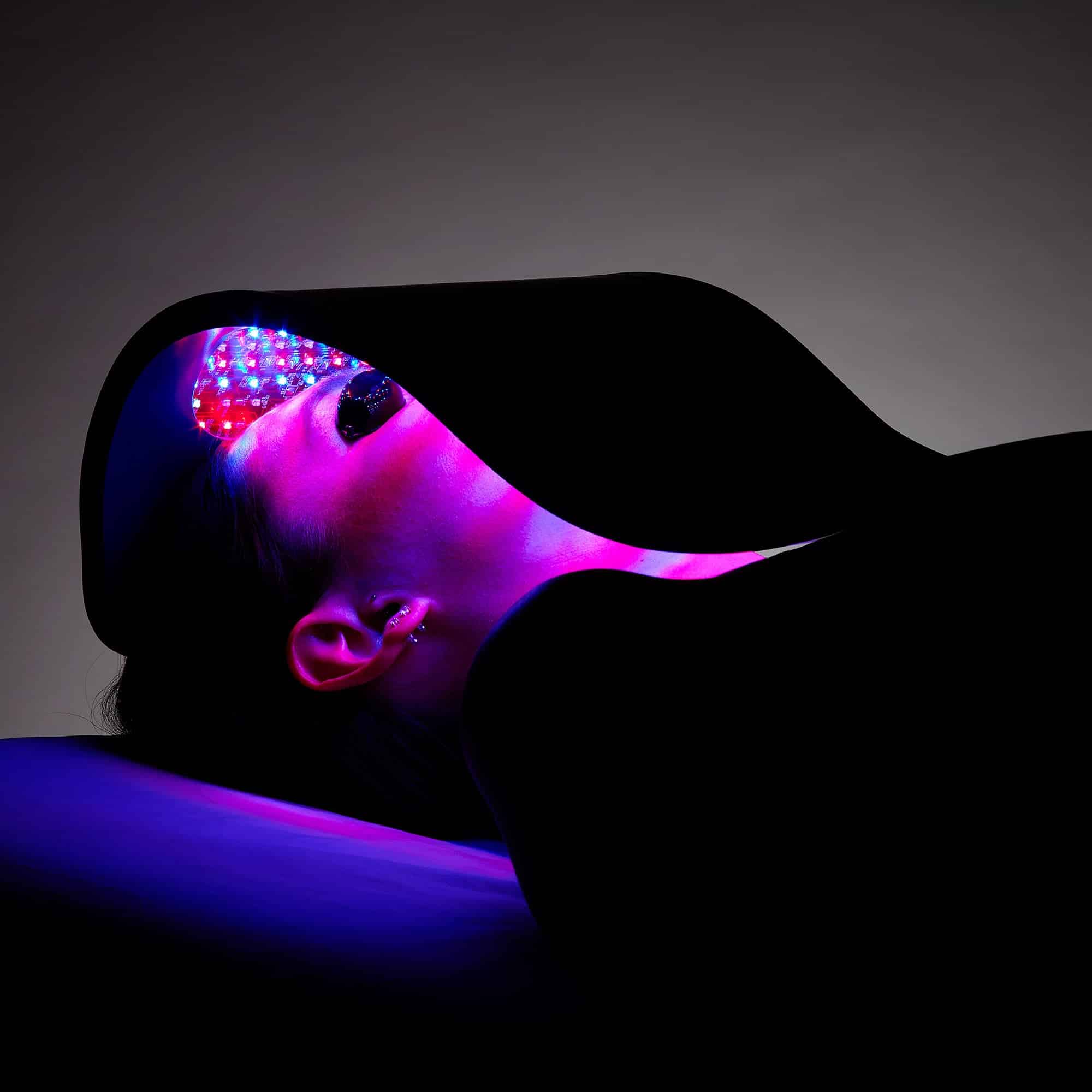
Celluma LED red light therapy for collagen support and post-treatment recovery at Veritas Backstage Austin Texas

Skin Treatment

LED Red Light Therapy

Clinically validated wavelengths that support collagen production, reduce inflammation, and accelerate post-treatment recovery — with no heat, no downtime, and no active ingredients.

LED red light therapy uses specific wavelengths of light — primarily red (630–700nm) and near-infrared (800–900nm) — to stimulate cellular repair processes in the skin. The mechanism is photobiomodulation: light energy absorbed by the mitochondria in skin cells accelerates ATP production, supporting the body's natural collagen synthesis, reducing inflammation, and enhancing cellular repair.

This is not a surface treatment. The light penetrates to the dermis — the layer where collagen and elastin are produced — and signals repair from within. There are no active acids, no mechanical disruption, and no thermal damage involved. The treatment works entirely through the body's own cellular response to specific light frequencies.

LED red light therapy has a well-established research base across wound healing, collagen production, inflammation modulation, and post-procedure recovery. At Veritas Backstage, it is offered both as a standalone treatment and as a complement to microneedling, laser, and injectable sessions to accelerate recovery and enhance results.

THE EXPERIENCE

A LED red light therapy session takes approximately 30 minutes. You lie still under the Celluma panel while the light is delivered. The experience is quiet and non-invasive — there is no sensation of heat, no sound, and no recovery period. Most patients find the session restful.

The Celluma Pro conforms closely to the treatment area for optimal light delivery. Eye protection is worn throughout the session. The Celluma Pro is FDA-cleared and clinically validated to reduce fine lines and wrinkles, support collagen production, and improve skin quality and density.

Sessions can be scheduled as a standalone appointment or added to another treatment on the same day. When added post-procedure — following microneedling or laser — it is scheduled at the end of the appointment before you leave.

What it treats

SKIN HEALTH AND QUALITY

  • Collagen and elastin support

  • Fine lines from reduced collagen density

  • Dullness and skin quality decline

  • Uneven surface texture

INFLAMMATION AND RECOVERY

  • Post-procedure redness and inflammation following microneedling, laser, or injectables

  • Active acne (blue light wavelength, when applicable)

  • Rosacea and inflammatory skin conditions

HEALING AND REPAIR

  • Accelerated wound healing and post-procedure recovery

  • Reduction of post-inflammatory hyperpigmentation risk

  • General skin resilience support

IDEAL CANDIDATE

LED red light therapy is appropriate for virtually all skin types and tones. It is particularly well-suited as an add-on for patients recovering from microneedling, laser, or injectable procedures, where reducing inflammation and accelerating collagen production is directly beneficial.

Patients managing collagen decline in the Preventative or First Signs pathways, those with active inflammatory skin conditions, and those who want a low-intervention maintenance option between more intensive treatments all benefit from consistent LED sessions.

It is not appropriate for patients with photosensitive conditions or who are taking photosensitizing medications. Your provider will review your health history before scheduling.

Results and maintenance

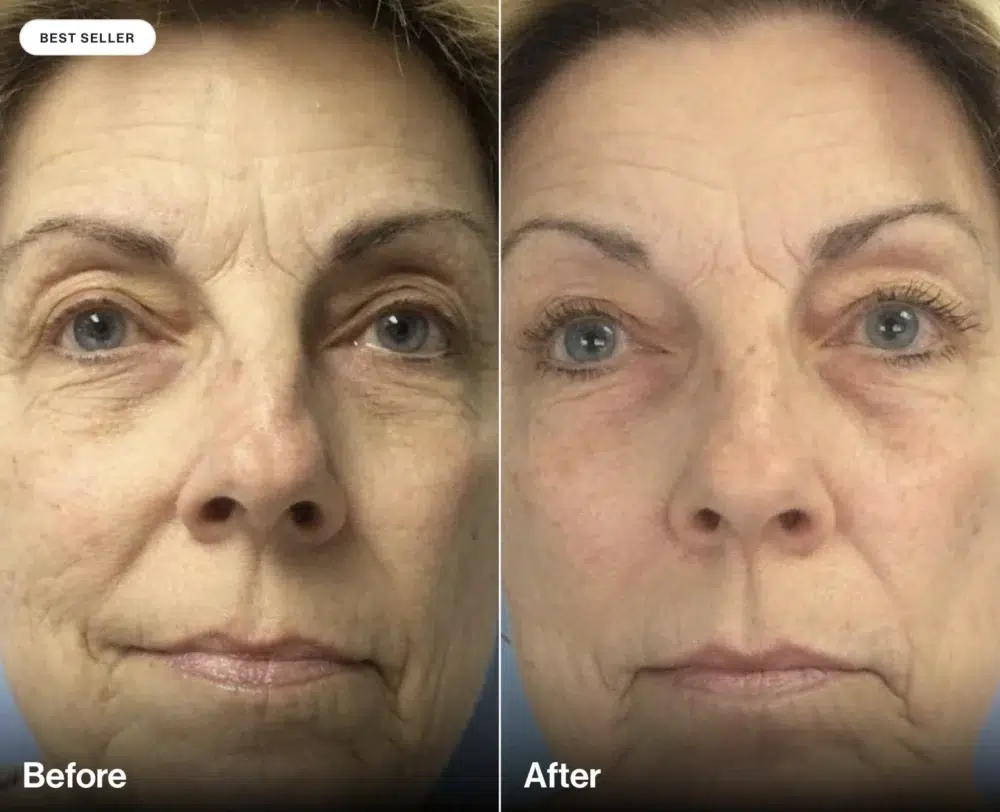
LED red light therapy is cumulative. The standard protocol is three sessions per week for four weeks — twelve sessions total. Results are measurable: visible improvement in skin quality, collagen density, and fine line reduction. Most patients maintain results with monthly sessions after completing an initial series. When used as a post-procedure add-on, the inflammation reduction and accelerated healing are noticeable after a single session.
PAIRS WITH

EmFace combines radiofrequency and HIFES (high-intensity facial electrical stimulation) to tone the underlying facial muscles and stimulate collagen — with zero needles and zero downtime.

LED red light therapy and microneedling work through adjacent mechanisms toward a shared goal: stronger, denser collagen. Microneedling initiates the wound-healing response; LED therapy enhances the cellular environment in which that healing occurs. When delivered immediately following a microneedling session — a common pairing at Veritas Backstage — the LED session reduces acute inflammation, supports the recovery process, and signals the same collagen-building cells the microneedling has already activated. The result is more efficient healing and more significant collagen production than microneedling alone.

FAQ • NEED TO KNOW

QUESTIONS

LED red light therapy uses specific wavelengths of light — primarily red and near-infrared — to stimulate cellular activity in the skin. The light energy is absorbed by mitochondria in skin cells, which accelerates ATP production and supports the cellular functions responsible for collagen synthesis, inflammation reduction, and tissue repair. This process is called photobiomodulation. The treatment does not damage tissue — it signals cells to repair and rebuild more efficiently than they would on their own.
Yes. LED therapy uses specific non-UV light frequencies and does not involve heat or photochemical reactions that vary by skin melanin. It is safe across all Fitzpatrick skin types and is one of the few aesthetic treatments with no meaningful contraindication related to skin tone. Patients with photosensitive conditions or who are taking photosensitizing medications should discuss their history with their provider before scheduling.
For a meaningful standalone result, a series of six to ten sessions scheduled twice per week over three to five weeks is the standard protocol. Single sessions produce mild improvement and are most effective when used as a post-procedure add-on. After completing an initial series, monthly maintenance sessions sustain the improvement. When used after microneedling or laser, the inflammation reduction and healing acceleration are noticeable after a single post-procedure session.
Certain wavelengths of LED light have a clinically validated effect on acne. Blue light (415nm) targets Cutibacterium acnes — the bacteria responsible for inflammatory acne — and reduces bacterial activity in the follicle. Red light reduces the inflammation that produces swollen, tender breakouts. The Celluma device combines both wavelengths for patients with active acne, addressing both the bacterial and inflammatory components of the condition. For patients managing chronic or cystic acne, LED therapy is most effective as part of a broader protocol that includes appropriate topical treatment.
No. Laser treatments deliver concentrated, high-energy light that creates a targeted thermal or photoacoustic effect in the tissue. LED therapy delivers low-level, broad-area light that stimulates cellular function without creating any thermal damage or disruption. Laser treatments produce significant, often immediate results with associated downtime. LED therapy produces gradual, cumulative results with no downtime and no heat sensation. The two approaches are complementary — LED therapy is frequently used after laser procedures to accelerate recovery.
Before and after LED red light therapy for fine lines and wrinkles at Veritas Backstage Austin

**Results may vary. Veritas Backstage is reputable for complete customer satisfaction for completed treatments. Unless otherwise noted, testimonials provided for Backstage are clients who have undergone complete treatment(s.) However, results may vary per client. No treatment is promised to provide permanent results. A guarantee is neither provided nor implied.

ALL COMPOUNDED PRODUCTS PRESCRIBED BY LICENSED HEALTHCARE PROFESSIONALS.
MEDICAL CONSULTATION REQUIRED BEFORE STARTING ANY MEDICATION.